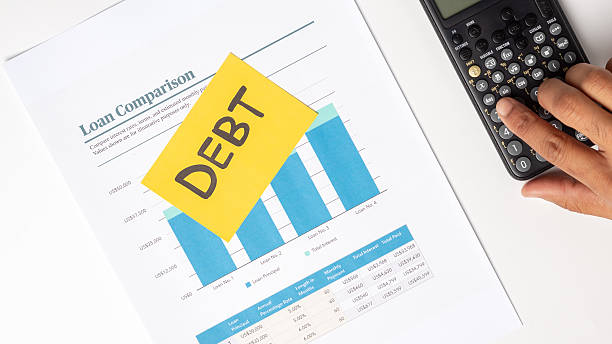
When you carry balances on multiple credit cards, the monthly payment burden can feel overwhelming. You know you need to pay more than the minimum, but where should that extra money go? Many people choose the wrong target, sending extra cash to the card with the smallest balance because it feels good to eliminate one payment quickly. But if your goal is to save the most money and get out of debt as fast as possible, there is a better way. It is called the debt avalanche method, and it works by focusing your extra payments on the card with the highest interest rate first, while making only minimum payments on everything else.
The logic behind the avalanche is simple. Credit card interest compounds, meaning that a higher rate costs you more every single month you carry that balance. If one card charges twenty-four percent interest and another charges fifteen percent, every dollar of debt on the first card is generating more new charges than a dollar on the second card. By attacking the most expensive debt first, you reduce that high-cost balance more quickly, which means less total interest accrues over the life of your repayment plan. The savings can be significant, often adding up to hundreds or even thousands of dollars, depending on the size of your debt and the length of time you take to repay it.
To put the avalanche into practice, start by gathering all your credit card statements and writing down each balance and its annual percentage rate, or APR. Ignore the minimum payment amounts for now. Simply rank the cards from highest APR to lowest. Your plan is to pay the minimum on every card except the one at the top of that list. Every extra dollar you can scrape together, whether from trimming your budget or picking up a side gig, goes straight to that highest-interest card. Once that card is completely paid off, you take the same extra payment amount and roll it onto the next highest-rate card. This creates a snowball effect of your own, but instead of celebrating small victories, you are celebrating a steadily shrinking pile of high-cost debt.
Consider a concrete example. Suppose you have a five-thousand-dollar balance on a card charging twenty-two percent, a three-thousand-dollar balance on a card charging seventeen percent, and a two-thousand-dollar balance on a card charging twelve percent. If you decide to pay the smallest balance first, you can clear the twelve percent card fairly quickly, but during that time the twenty-two percent card is racking up expensive interest charges. If you instead put your extra money toward the twenty-two percent card first, you eliminate that expensive balance sooner, and then you move on to the seventeen percent card. The order of which cards get paid off is different, but the total amount you pay in interest is much lower with the avalanche. The mathematics are not in dispute. The highest interest rate always costs you the most per dollar of debt.
The only real drawback to the avalanche method is that it can be slow to produce a payoff. If your highest-interest card also happens to be your largest balance, you might work for months or even years before you see any card completely zeroed out. For some people, this lack of a quick win makes it hard to stay motivated. That is why the debt snowball method, which ignores interest rates and pays off the smallest balance first, is so popular. The small victories give you emotional momentum. But if you are the type of person who can stay disciplined with a spreadsheet and a clear goal, the avalanche is objectively better for your wallet. You should also know that you do not have to pick one method forever. Some people use the snowball for the first few months to build confidence, then switch to the avalanche once they have made a habit of making extra payments. Others do the reverse, clearing the high-interest cards first and then enjoying the psychological boost of clearing a small balance at the end.
One important note about the avalanche method is that it only works if you are already covering all your minimum payments on time. Missing a minimum payment will trigger fees and penalty interest rates, which can erase any savings from your strategy. So before you start directing extra cash toward the highest-rate card, make sure your regular payments are fully automated or at least scheduled well ahead of the due date. Also, consider whether you are still using your credit cards for new purchases. If you are adding new charges while trying to pay down old ones, you are fighting a losing battle. The avalanche method assumes that you have stopped using your cards or at least that you are paying off new purchases in full each month. Otherwise, the interest rate on new charges becomes another high-rate debt that you need to attack.
For middle-class households juggling everyday expenses, the avocado method might seem like a lot of math. But at its core, it is just a simple rule: always pay off the most expensive debt first. You do not need a financial advisor or a special app to make it work. A basic list and a commitment to stick to the order is enough. Over time, as each high-rate card drops away, you will notice that more of your monthly payment goes toward the actual balance rather than interest charges. That shift is what speeds up your repayment. The end result is the same as any other payoff strategy, a zero balance on every card, but the avalanche gets you there with less money wasted along the way. If you want to be smart about your credit and keep more of your hard-earned cash, the debt avalanche is the strategy to choose.