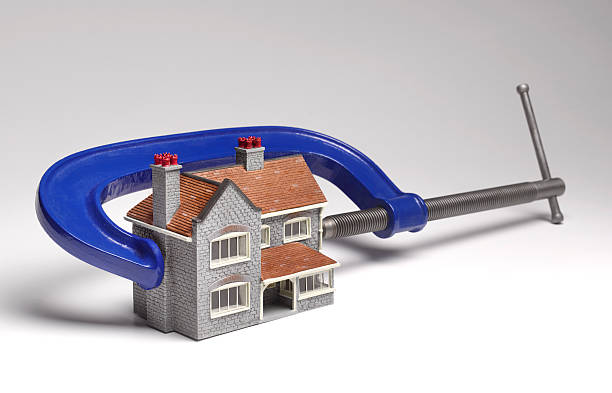
A new car is one of the most expensive purchases you will make outside of a home. The dealership does not want to talk about the final price, though. They want to talk about the monthly payment. That is how many middle-class consumers end up with an installment loan that lasts seven years. The payment looks small enough to fit in your budget. But that loan can quietly stretch you into a state of overextended debt, where one surprise expense can knock everything off balance.
Let’s look at how this works. An installment loan is a fixed amount of money that you pay back in equal monthly payments over a set period. Auto loans are a perfect example. The classic length was four or five years. Now six and seven years are common, and some lenders offer eight. Longer terms mean smaller monthly payments. That feels like a win. But it comes at a steep cost in two ways: interest and depreciation.
Say you borrow $35,000 for a car. With a four-year loan at 6 percent interest, your payment is roughly $822. With a seven-year loan at the same rate, your payment drops to about $512. That difference of $310 per month makes a more expensive car look affordable. Over the life of the seven-year loan, you will pay about $7,900 in interest. On the four-year loan, you pay about $4,400. So you save $3,500 in interest by choosing the shorter term, but your payment is higher. Many people cannot handle the higher payment, so they choose the longer loan. That is not always a bad decision. The danger comes when you use the longer loan to buy more car than you truly need.
The bigger problem is what the car is worth while you are still paying for it. Cars lose value quickly. In the first year, a new car can drop by 20 percent or more. After three years, it might be worth only half of what you paid. With a seven-year loan, you are making payments for years after the car’s value has fallen well below the amount you still owe. This is called being upside down. If the car is totaled in an accident, your insurance company will pay you the market value, not the loan balance. You still owe the difference. That can be thousands of dollars you have to pay out of pocket. If you decide to sell the car, you have to come up with that same difference just to get rid of the loan.
Being upside down is a form of overextended debt. You owe more on an asset than it is worth. That is not automatically fatal, but it becomes dangerous when you need to replace the car. Many people in this situation roll their remaining debt into a new loan. They trade in the old car, add the negative equity to the new loan, and then stretch that loan out for another seven years. Now they owe $40,000 on a car worth $30,000, and the cycle repeats. Every car they buy becomes harder to escape.
Middle-class consumers often fall into this trap because they focus on the monthly payment instead of the total cost. The salesperson says, “You can get this car for $499 a month.” That number sounds fine. But you have to ask what the total loan amount is, what the interest rate is, and how many months you will be paying. A $499 payment over 84 months is nearly $42,000. If the car’s sticker price is $35,000, you are paying a lot extra in interest. And because the loan is so long, you will be paying it off long after the car feels new.
The same logic applies to other installment loans, like personal loans and some furniture or electronics financing. A seven-year personal loan for a wedding or a home renovation can also stretch you thin. But car loans are the most common because cars are expensive and necessary for many jobs. The question is not whether you can make the payment this month. The question is whether you can still make that payment in year five, when the car is no longer under warranty and repairs start showing up. If your income dips or your rent rises, a long installment loan becomes a heavy anchor.
To avoid this kind of overextended debt, keep your auto loan term to five years or fewer. If you cannot afford the payment on a five-year loan, you are looking at a car that is too expensive for your budget. A reliable used car with a shorter loan is far better than a new car with a seven-year burden. Also factor in insurance, maintenance, and registration costs. Those are part of the true cost of driving. And never assume you will keep the car for the entire loan term. Most people do not. So plan for the possibility that you might need to sell it before it is paid off.
The simplest rule is this: the longer the loan, the more you pay, and the less flexibility you have. A manageable monthly payment is only one piece of the puzzle. Your overall debt picture matters more. When too much of your income goes to installment payments, you lose the ability to save for emergencies, invest for retirement, or handle life’s surprises. The seven-year car loan looks like a friend at the dealership. Then it turns into a seven-year leash.
Take a clear look at your current car loan. If you have more than five years left or you owe more than the car is worth, make a plan to pay it down faster. Round up your payments, refinance to a shorter term if you can get a lower rate, or make extra principal payments when possible. The goal is to give yourself breathing room. You don’t want your car to own you. You want to own your car, free and clear, before it becomes a burden you cannot carry.