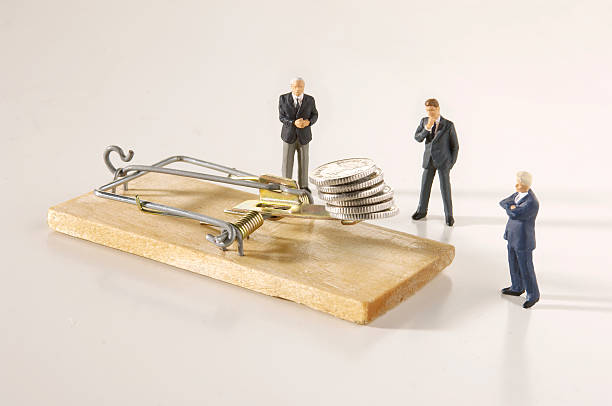
For the typical middle-class household, few financial decisions feel as necessary and as stressful as getting a new car. You need reliable transportation to get to work, take the kids to school, and handle the errands of daily life. When your old car starts having problems, the pressure is on. In that moment of anxiety, a car dealer offers you a shiny new vehicle with a monthly payment that fits your budget. The catch is that this payment is for a lease, not a purchase. This is how many otherwise sensible consumers fall into a specific kind of overextended debt known as the lease trap.
At first glance, leasing seems like a great deal. The monthly payments are typically two hundred to three hundred dollars lower than what you would pay to buy the same car with a traditional loan. For a family already stretched thin by mortgage payments, student loans, and credit card bills, that lower monthly number is extremely attractive. You can drive a brand new, fully loaded SUV for the same cost as a modest used sedan. The dealer explains that you are only paying for the portion of the car’s value that you use during the lease term. This explanation sounds logical, but it hides the real financial danger.
The danger begins with the concept of equity. When you buy a car with a loan, every payment slowly builds your ownership of the vehicle. After three years, if you have made all your payments, you own a car worth maybe fifteen thousand dollars. You can sell it, trade it in, or keep driving it with no monthly payment. The asset has value that belongs to you. With a lease, you own nothing. At the end of thirty-six months, you return the car to the dealer. You walk away empty-handed. All of those payments, often totaling more than fifteen thousand dollars, are gone. You have paid for the privilege of driving, but you have no asset to show for it.
The problem gets much worse when your life changes. A lease is a three-year contract, and a lot can happen in three years. You might lose your job. You might have a medical emergency. You might need to move to a city where you no longer need a car. When these events happen, you cannot simply stop paying for the lease. You are stuck. If you try to return the car early, the dealer will hit you with thousands of dollars in penalties. If you cannot make the payments, your credit score takes a massive hit, and you can be sued for the remaining balance. This is how a lease that seemed affordable turns into a financial anchor that drags down your entire life.
The middle-class consumer who becomes overextended through a lease often did not plan for this scenario. They focused only on the monthly payment and ignored the long-term consequences. They did not think about what would happen if they drove more miles than the lease allows. The standard lease agreement gives you twelve thousand miles per year. If you drive more than that, you are charged a penalty of fifteen to twenty-five cents per mile. For a family that drives fifteen thousand miles a year, that is an extra nine hundred dollars at the end of the lease. Many consumers do not realize they are over the limit until they go to turn in the car.
There is also the issue of wear and tear. Lease agreements demand that the car be returned in excellent condition. A small dent from a grocery cart, a scratch from your garage door, or a stain on the upholstery can result in hundreds of dollars in charges. The dealer has an entire team of inspectors who look for anything they can bill you for. These charges pile up at the exact moment you are trying to get into your next car, leaving you with no cash and no trade-in value.
The most common path into overextended auto debt through leasing is the cycle of never getting out. At the end of a three-year lease, the consumer has no equity and no down payment for a new car. The dealer offers to roll them into a new lease on a newer model. This resets the clock, but it also adds a hidden cost. The dealer buries the fees and penalties from the old lease into the new one. You end up paying for a car you no longer drive. Each time you cycle into a new lease, the total debt grows, but you never own anything. This is a treadmill that can keep you trapped for a decade or more.
The smarter approach for the middle-class consumer is to buy a car you can afford to own, pay it off, and drive it for several years with no payment. This builds equity and frees up cash for savings, investments, and emergencies. Leasing is a product designed for people who want a new car every three years and have enough income to treat that desire as a luxury. For a family trying to manage credit and avoid overextension, leasing a car you cannot afford to buy is a fast track to financial stress that could have been avoided by choosing a simpler, cheaper vehicle.