If you carry a balance on a credit card, you have likely seen that small line on your monthly statement that reads “minimum payment due.” It seems like a gift. You can pay a tiny fraction of your total debt—often just one to three percent of what you owe—and the credit card company will report you as current. No late fees. No damaged credit score. Just a simple, low payment and you move on with your life.
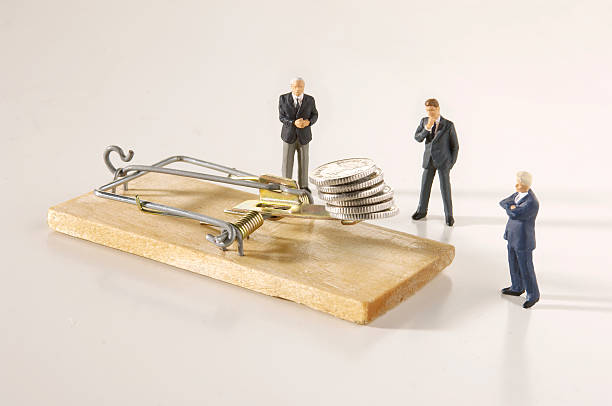
That convenience is one of the most expensive mistakes middle-class consumers make. The minimum payment is not designed to help you get out of debt. It is designed to keep you in it for as long as possible, while the credit card company collects interest on every dollar you leave unpaid. Understanding how this trap works is the first step to escaping it, especially when dealing with revolving credit accounts like credit cards and lines of credit.
Revolving credit is different from installment loans, like a car loan or a mortgage. With a mortgage, you borrow a fixed amount and pay it back over a set period. With revolving credit, you have a credit limit, and you can borrow, repay, and borrow again as long as you stay under that limit. This flexibility is great for emergencies or short-term cash flow problems. But it also makes it dangerously easy to carry a balance month after month, because the monthly payment required is so low.
Credit card companies calculate the minimum payment by taking a small percentage of your outstanding balance, usually between one and three percent, plus any interest and fees that have accrued that month. If you owe five thousand dollars, your minimum payment might be around one hundred dollars. That sounds manageable. But here is the math they do not put in big print on the statement.
Assume you owe five thousand dollars on a card with an eighteen percent annual interest rate. That interest is applied to your daily balance, but for simplicity, think of it as costing you about seventy-five dollars in interest each month if you never pay down the principal. If you make only the minimum payment of one hundred dollars, roughly seventy-five dollars goes toward interest, and only twenty-five dollars actually reduces what you borrowed. At that rate, it would take you more than thirty years to pay off that five thousand dollars, and you would end up paying over six thousand dollars in interest alone. That is more than the original debt.
The trap is psychological as well as mathematical. When you see that small number on your statement, it feels like progress. You made a payment. You are doing the responsible thing. But you are barely treading water. If you keep charging new purchases on the card, you are actually moving backward. The balance grows faster than your minimum payment can reduce it, because new purchases start accruing interest immediately if you have not been paying your full balance. Many middle-class consumers find themselves in a cycle where they pay one hundred dollars this month, charge eighty dollars in groceries and gas, and end up with a balance that is effectively the same or higher.
The credit card industry counts on this. They know that if you make the minimum payment, you will stay a customer for years. Your interest payments become a steady, predictable revenue stream. That is why the fine print on your statement often includes a warning like “if you make only the minimum payment, you will pay more in interest and it will take you longer to pay off your balance.” But that warning is easy to ignore when the alternative is scraping together four hundred dollars or more to pay the full balance.
Another danger of making only minimum payments is the effect on your credit utilization ratio. This is the amount of credit you are using compared to your total available credit. Creditors and scoring models like to see this number below thirty percent. If you have a ten-thousand-dollar credit limit and you are carrying an eight-thousand-dollar balance, your utilization is eighty percent. That high number signals to lenders that you are overextended and risky. It drags down your credit score, which means you will pay higher interest rates on future loans, car insurance, and even apartment deposits.
So what can you do if you are caught in this trap? The first step is to commit to paying more than the minimum, even if it is only ten or twenty dollars extra each month. That extra amount goes straight to the principal, because the minimum payment already covers the interest. If you can pay double the minimum, you can cut years off your repayment timeline and save thousands in interest.
Another strategy is to use something called the debt avalanche or debt snowball method, but the simplest version is just to pick one card and throw every extra dollar you can at it while making minimums on everything else. Once that card is paid off, move to the next one. The key is to stop adding new charges to the card while you are paying it down. If you cannot trust yourself to do that, put the card in a drawer or freeze it in a block of ice. Make it physically hard to use.
If you are truly stuck and cannot make more than the minimum payment, consider a balance transfer to a card with a zero percent introductory APR. You will pay a transfer fee of three to five percent, but if you can pay off the balance during the promotional period, you will avoid months of interest charges. Just be careful not to run up the old card again, or you will be in a deeper hole.
The minimum payment is a tool, but it is a tool for the bank, not for you. Treat it as the floor, not the goal. Every dollar you pay above the minimum is a dollar that takes back control of your financial future.