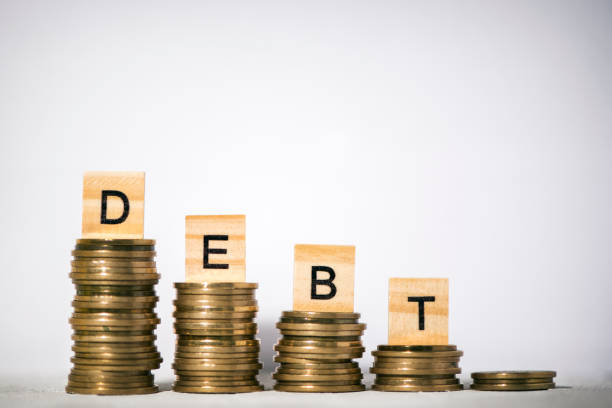
Compound interest is often celebrated as a powerful financial tool for building wealth, famously dubbed the “eighth wonder of the world” by Albert Einstein. However, this same mathematical force possesses a dark and frequently overlooked twin: when you are the one paying interest, particularly on debt, compound interest transforms from a loyal ally into a relentless adversary, systematically working against your financial well-being.
At its core, compound interest is interest calculated on the initial principal, which also includes all of the accumulated interest from previous periods. In simpler terms, it is “interest on interest.“ When you save or invest, this mechanism works gloriously in your favor. Your money earns returns, those returns are added to your principal, and the next period’s returns are calculated on this new, larger amount, creating a snowball effect of growth over time. The key ingredients for this positive outcome are time and a positive rate of return.
The sinister inversion occurs when you are on the hook for paying compound interest, most commonly on revolving debts like credit cards, certain personal loans, and payday loans. Here, the same exponential principle applies, but it magnifies your debt rather than your savings. The process works against you with mathematical precision. If you carry a balance on a credit card, for instance, interest is charged on the outstanding amount. If that interest is not paid in full by the next cycle, it is added to the principal balance. Subsequently, interest is then calculated on this new, higher balance. This creates a debt spiral where you are not just paying interest on your original purchases, but also on the accumulating interest itself.
This compounding effect is what makes high-interest debt so pernicious and difficult to escape. Consider a $5,000 credit card balance with an 18% Annual Percentage Rate (APR). If you only make the minimum payment—often calculated as a small percentage of the balance plus interest—you could be repaying that debt for over two decades, ultimately paying more in interest than the original amount borrowed. The debt seems to have a life of its own, growing even as you make consistent payments, because the compounding interest continually outpaces your repayment efforts. This is how compound interest works against you: it silently inflates your liabilities, erodes your disposable income, and traps you in a cycle of repayment that delays or destroys other financial goals, such as saving for a home, investing for retirement, or building an emergency fund.
Furthermore, the psychological and practical impacts are profound. The stress of mounting debt can affect mental health and limit life choices. Financially, money that flows toward servicing compounding debt is money that is not working for you in positive compounding investments. This represents a “double loss”: you lose the amount paid in interest, and you lose the potential future growth that money could have generated if it had been invested. This opportunity cost is the silent tax of consumer debt, a tax enforced by the mechanics of compound interest.
Ultimately, understanding compound interest is not complete without acknowledging its dual nature. While it is the engine of long-term wealth creation for savers and investors, it is equally the engine of long-term financial erosion for borrowers carrying high-interest, revolving debts. The force itself is neutral; its impact is determined by which side of the equation you occupy. To prevent it from working against you, financial literacy and disciplined habits are essential. Prioritizing the repayment of high-interest debt, avoiding the minimum payment trap, and understanding the true cost of borrowed money are the critical defenses against allowing the “eighth wonder of the world” to become a lifelong financial burden.