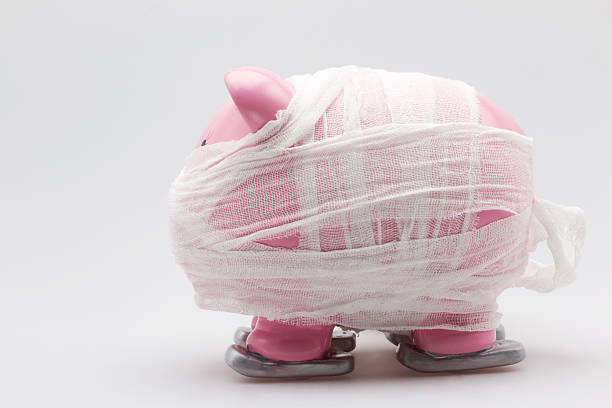
It seems easy. You buy something on a credit card, and when the bill arrives, you see a small number labeled “minimum payment.“ You might think, “If I send this amount, I’m handling my bill.“ And technically, you are. But that small payment is often the biggest trap in personal finance. Millions of middle-class consumers fall into this trap simply because no one ever explained how credit cards really work.
Consider a typical scenario. You owe $1,500 on a card with a 19% interest rate. Your minimum payment is about $38. You pay it every month on time. After five years, you owe roughly $1,400. Why? Because most of that $38 went to interest, not to the original $1,500 you borrowed. The actual debt you took on has barely shrunk. This is not an exaggeration. Many people repeat this pattern for a decade or longer and never see their balance meaningfully drop. They think they are being responsible. In reality, they are paying a steady fee for the privilege of remaining in debt.
The root problem is a lack of financial literacy. Credit card interest is charged daily on whatever balance you carry. When you don’t pay off the full amount each month, new purchases often start accruing interest immediately. The minimum payment is set by the card company, usually one to three percent of your balance plus finance charges. That means the minimum barely covers the interest that builds up. Only a tiny slice of your payment goes toward reducing what you actually owe. Over time, you pay incredible sums just for the right to keep borrowing that same money.
None of this is truly hidden, but it is buried in fine print and confusing jargon. Most college-educated consumers have never learned about compound interest in the context of a credit card. Schools rarely teach it. Banks do not advertise it. As a result, a standard, intelligent person can go through life believing that paying the minimum is an acceptable long-term plan. That belief is a direct symptom of financial illiteracy. It is not about being dumb. It is about never being shown the math.
Here is a real example. Imagine you have a $2,500 balance at a 22% annual rate. Your minimum payment starts at $50. If you pay only that, it will take more than ten years to clear the debt, and you will pay close to $2,000 in interest. But if you double your payment to $100 every month, you finish in about two and a half years and pay roughly $700 in interest. That difference of $1,300 is the price of not understanding how credit works. And that money could have gone into savings, a vacation, or repairs on your home.
There is also a psychological side to the minimum payment. Credit card companies want you to carry a balance, because that is how they earn money. A low minimum gives you the illusion of control. You feel you have done enough for the month. Meanwhile, your budget is tighter because you are still paying for a purchase from years ago. This often forces you to reach for credit again when an unexpected expense appears. The result is a cycle of debt that feels impossible to break. You wonder why you can never get ahead, but the answer has been sitting on your statement all along.
Another common misunderstanding is that sending a little extra when you can afford it will solve the problem. Many people round up and pay $50 when the minimum is $35. That helps, but if your balance is large and your interest rate is high, even those modest extra payments can be eaten up by finance charges. The only way to know if you are making real progress is to know your interest rate and to create a clear plan. Without that knowledge, you are essentially flying blind.
Fortunately, overcoming this does not require a degree in finance. Start by reading your credit card statement carefully. Find the annual percentage rate and the finance charge. Then use a simple online calculator. Type in your current balance, your interest rate, and a monthly payment amount that you can realistically commit to. The calculator will show you exactly how many months it takes to become debt-free. That few minutes of learning is a powerful act of building financial literacy. Once you see the timeline, you can make a decision based on facts instead of vague hope.
One simple rule makes a huge difference: always pay more than the minimum. Even an extra $20 per month shortens your repayment period by years and saves hundreds of dollars. If you have multiple cards, focus on paying off the one with the highest interest rate first, or start with the smallest balance so you get a quick win. Both methods work. The hardest part is breaking the habit of paying only that small number on your bill.
Financial illiteracy is not a personal failure. It is a lack of exposure to basic money concepts. Credit cards are the most common place where this lack shows up. Every day, sensible people make decisions based on a number chosen by a bank, not on the real math. The minimum payment is not your friend. It is a legal but quiet way to keep you borrowing. You do not need to become a financial expert to escape this trap. You just need to understand one simple idea: when you only pay the minimum, you are mostly paying interest, not paying off your debt. Turn that understanding into action. Look at your balances, run the numbers, and commit to a payment that actually gets you somewhere. That moment of reflection is the beginning of true financial literacy. And with that literacy, you will never again let a credit card silently control your future.