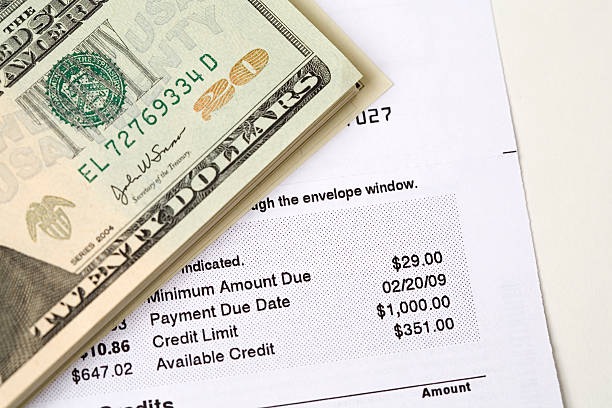
A lot of people think that as long as they pay their credit card bill on time each month, their credit score will be just fine. While paying on time is the most important factor, there is another piece of the puzzle that often gets overlooked: credit utilization. This is the percentage of your available credit that you are actually using at any given moment. If you have ever heard the advice to keep your credit card balances under 30 percent of your limit, that is credit utilization in action. Understanding why that 30 percent figure matters—and how to manage it—can help you keep your credit score healthy without a lot of extra work.
Credit utilization is based on a simple calculation. You take the total amount you owe on all your revolving credit accounts, which are usually credit cards, and divide that by your total available credit limit. If you have two cards with a combined limit of ten thousand dollars and you currently owe two thousand dollars, your credit utilization is 20 percent. Credit scoring models, especially the widely used FICO score, look at this number closely because it gives them a sense of your financial behavior. A low utilization suggests you are not relying heavily on borrowed money, while a high one can signal that you might be stretched thin.
The 30 percent rule is not a hard law written into the credit scoring system, but it has become a widely accepted guideline. Studies of consumer credit data have shown that people who consistently keep their utilization below 30 percent tend to have higher credit scores than those who let it climb higher. The impact is not linear. Going from 90 percent utilization down to 50 percent can help your score a great deal, but the biggest jump often comes when you get below 30 percent. And if you can push it down to single digits, say 5 or 10 percent, you will typically see even more improvement, though the effect diminishes as you get lower. That means there is no magic number you must hit, but 30 percent is a safe target for most middle-class consumers.
Why does credit utilization matter so much? Credit scoring models are designed to predict risk. When your utilization is high, the model assumes that you might be having trouble managing your finances or that an unexpected expense could push you into default. Even if you are paying your bill in full every month, a high balance reported to the credit bureaus on your statement date can make you look risky. This is a key point that many people miss. Your credit card company typically reports your balance to the bureaus once a month, usually on your statement closing date. Even if you pay that balance off before the due date, the high number has already been sent to the credit bureaus and can affect your score until the next report. That is why paying your balance every few weeks, rather than just once a month, can be a useful tool if you tend to carry a higher balance for part of the month.
Another important nuance is that credit utilization has no memory in current scoring models. Unlike late payments, which can stay on your credit report for seven years, utilization only matters at the moment your score is pulled. If you have a high utilization one month, your score will temporarily drop. But if you lower it the next month, your score bounces back. This can be a relief if you know you have a big purchase coming up. You might see a dip for a month or two, but it will recover quickly once you pay down the balance.
For middle-class consumers, the most practical way to manage credit utilization is to keep an eye on your balances relative to your limits. If you have only one credit card with a five thousand dollar limit, try not to let your balance exceed fifteen hundred dollars. If you have multiple cards, aim to keep each one under 30 percent as well because scoring models also look at per-card utilization. A common mistake is to put most of your spending on one card while leaving the others at zero. That single card might have 90 percent utilization even though your overall utilization is lower. In that case, your score could suffer more than if you spread the balance across several cards.
If you find yourself regularly bumping up against your limits, you have a few options. You can ask your credit card issuer for a credit limit increase. If your income and credit history support it, a higher limit automatically lowers your utilization without you changing your spending. Just be careful not to use the extra room to spend more. You can also open a new credit card, but that will trigger a hard inquiry and lower your average account age, so it is not something to do lightly. The most straightforward fix is to simply spend less or make extra payments during the month.
Some people believe that carrying a small balance from month to month helps their credit score. That is a myth. It does not help at all. In fact, carrying a balance often means you are paying interest for no benefit to your credit score. As long as you pay your statement balance in full by the due date, you never owe interest, and your utilization will be exactly what it would be if you carried a balance. The only thing that matters for your score is the amount reported to the bureaus, not whether you paid it off before the due date.
The bottom line is that credit utilization is one of the most controllable factors in your credit score. It does not require years of patience like building a long credit history, and it can be adjusted within weeks. Keeping your balances low relative to your limits, ideally under 30 percent, will help you maintain a strong score and avoid unpleasant surprises when you apply for a mortgage or a car loan. It is a simple habit that pays off in real financial opportunities.