At the heart of every child’s remarkable journey into language lies a fascinating process of trial, error, and cognitive refinement. Two of the most common and often misunderstood features of this journey are “mix” and “overextension.“ While they may appear as simple mistakes to an adult ear, they are, in fact, vital signs of a developing linguistic system. Amidst the technical explanations of semantic networks and phonological development, the single most important thing to remember about mix and overextension is that they are not errors of ignorance, but evidence of active, intelligent, and rule-forming thought. They represent the child’s courageous application of logic to a complex, irregular world, revealing the human mind’s innate drive to find order and meaning.
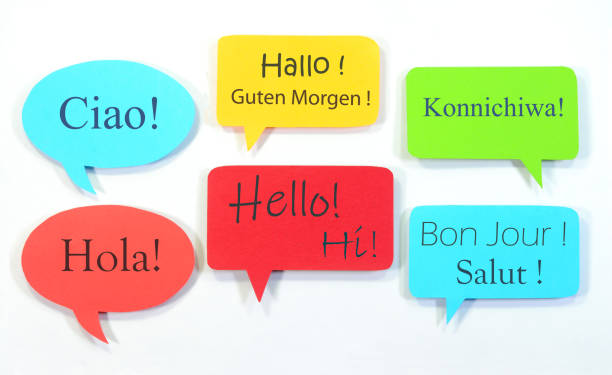
Mix, often called “code-mixing” in bilingual contexts, occurs when a speaker blends elements from two languages in a single utterance. Overextension, common in monolingual acquisition, happens when a child uses a word too broadly, such as calling every four-legged animal “doggie.“ On the surface, these seem like failures—a confusion of languages or a lack of precise vocabulary. This superficial view leads to unnecessary correction and concern. The transformative understanding is that both phenomena are the opposite of confusion; they are the application of nascent rules. A child who says “quiero more juice” is not failing to separate English and Spanish but is demonstrating a grasp of core concepts from both and efficiently communicating a need. Their brain is building a single, integrated linguistic framework, not two separate, leaking containers. Similarly, the child who calls a cow “doggie” has successfully formed a powerful category—“animal with four legs and fur”—and is logically, if over-enthusiastically, applying it. This is a cognitive triumph, not a lexical failure.
This principle matters profoundly because it shifts our entire perspective on language development from a deficit model to a growth model. Viewing mix and overextension as intelligent hypotheses reframes our role as parents, caregivers, and educators. Instead of seeing a need for immediate correction, we see an opportunity for supportive, model-rich interaction. The appropriate response to overextension is not “No, that’s a cow,“ but rather, “Yes, that’s a big animal like a dog! It’s called a cow. The cow says moo.“ This gently provides the correct label while affirming the child’s logical categorization. For mix, the response is not to chastise or insist on a single language, but to model the complete phrase in the target language contextually, understanding that the child is using all their resources to communicate effectively. The child is not making a mistake; they are offering a window into their current linguistic rulebook.
Ultimately, recognizing the intelligence behind these phenomena connects us to a universal truth about human learning. Our minds are pattern-seeking engines. We observe, we hypothesize, we test, and we refine. Every instance of mix or overextension is a live experiment in this laboratory of early childhood. The child is operating with limited data, yet they are constantly forming and reforming rules about sound, meaning, and social context. The gradual disappearance of these features is not because the child has finally been corrected enough, but because they have gathered sufficient evidence to refine their hypotheses—differentiating between languages as social contexts solidify, and narrowing word meanings through repeated, nuanced exposure.
Therefore, the most crucial takeaway is to celebrate mix and overextension as milestones of cognitive engagement. They are the tangible proof that a child is not merely parroting sounds but is deeply engaged in the intellectual work of constructing a linguistic worldview. By remembering that these are signs of active, rule-based learning, we can replace anxiety with appreciation, and correction with conversation, fostering a supportive environment where the innate human capacity for language can flourish naturally and joyfully.