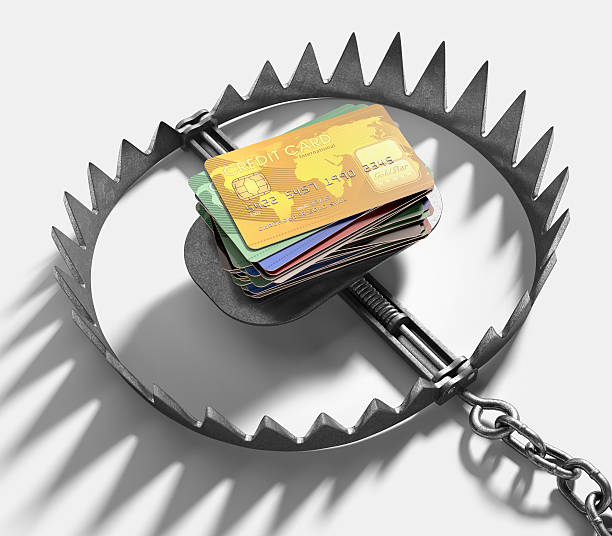
When you open your credit card statement, two numbers stand out: the total balance and the minimum payment. Most people focus on that smaller number, thinking, “I can handle that.” What looks like a helpful option is actually a psychological trap, one that behavioral economists have studied for decades. Understanding why you reach for the minimum payment instead of paying more can help you escape a cycle of debt that middle-class consumers often find themselves in.
The key concept here is called anchoring. In simple terms, your brain latches onto the first piece of information it sees and uses it as a reference point for every decision that follows. On a credit card statement, the minimum payment is that anchor. It is usually tiny compared to the total balance, often just two or three percent of what you owe. Once you see that number, your mind starts treating it as the default, the normal amount to pay. Paying anything more feels like a sacrifice, even though the smarter move would be to pay as much as you can.
Anchoring works together with another behavioral quirk known as loss aversion. Humans are wired to feel losses more intensely than equivalent gains. For example, losing twenty dollars stings much more than the pleasure of finding twenty dollars. Applied to credit card payments, paying an extra hundred dollars feels like a loss today, even though it saves you far more in interest charges over time. Your brain weighs that immediate feeling of loss more heavily than the abstract future gain of lower debt. So you stick with the minimum payment to avoid the present discomfort, and the debt grows.
There is also a phenomenon called mental accounting. People separate their money into mental buckets: this money is for bills, that money is for fun, this is for savings. When you decide how much to pay on a credit card, you might subconsciously treat the minimum payment as the “bill” and anything extra as an optional donation to the bank. You feel that you have already done your duty by paying the minimum. The extra money that could have gone to the card is instead used for a night out or a new gadget, because those purchases live in a different mental account. The credit card company relies on this separation to keep you paying interest.
Another factor is present bias, the tendency to prioritize immediate rewards over future well-being. Paying more on your credit card gives you no pleasure today. It does not buy you a dinner, a movie ticket, or a new shirt. It only reduces future debt, which feels distant and abstract. Meanwhile, spending that same money on something tangible right now feels good. Present bias explains why even financially literate people often choose the minimum payment. The future is just too far away to compete with today’s craving.
All of these forces push you toward making monthly payments that barely cover the interest, let alone the principal. You pay and pay, but the balance hardly moves. This is the debt treadmill. The credit card industry knows this, which is why they design statements to highlight the minimum payment and bury the true cost of carrying a balance. They count on your brain’s shortcuts to keep you in the trap.
How do you fight back? The first step is to recognize the tricks. When you open that statement, deliberately ignore the minimum payment number. Cover it with your hand if you have to. Instead, look at the total balance and figure out a realistic amount you can pay that is significantly higher than the minimum. Set up an automatic payment for that amount so you never see the anchor again. You can also reframe the decision: instead of thinking about losing money when you pay extra, think about the interest you are gaining by not paying it. That switches the mental calculation from a loss to a gain, even if only in your imagination.
Another technique is to use commitment devices. For example, tell a friend or family member how much you plan to pay each month. The social cost of not following through can outweigh your present bias. You can also freeze your credit card in a block of ice or lock it away in a safe that is hard to open. These small roadblocks give your rational brain time to overcome the impulsive urge to spend.
Finally, start a “debt snowball” or “debt avalanche” approach, but with a behavioral twist. If you pay off one small card completely, you get a quick win that feels like a gain rather than a loss. That satisfying feeling can motivate you to keep going. Over time, your brain rewires itself to associate paying down debt with positive emotions.
Behavioral economics is not about blaming you for being irrational. It is about understanding the mental shortcuts that helped our ancestors survive but now work against us in a world of credit cards and compound interest. Middle-class consumers are especially vulnerable because they often have enough income to make the minimum payment but not enough to escape the trap quickly. By recognizing the psychological forces at play, you can take back control and turn the numbers in your favor. The minimum payment is not your friend. It is a carefully designed invitation to stay in debt. Do not accept it.