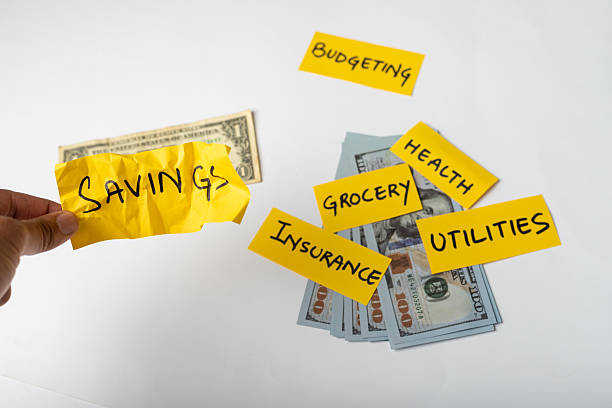
You get a raise, you feel great, and then you notice your neighbor bought a new SUV. Suddenly, your perfectly fine sedan feels old. You start thinking about a new car payment, maybe some new furniture, and a nicer vacation than usual. This is lifestyle inflation in action, but the real driver is often something subtler than just wanting more stuff. It is the psychological trap of social comparison, and it quietly rewrites the rules of your personal economy in ways that can damage your credit and your financial future.
The core problem is that human beings are wired to evaluate ourselves by looking sideways at others. When your income increases, your brain does not automatically adjust your satisfaction level. Instead, it looks around for new benchmarks. Your reference point shifts. You stop comparing yourself to the version of you from last year and start comparing yourself to the person in the next cubicle who just bought a lake house. This is not about greed in the classic sense. It is about a basic psychological need to feel like you are keeping pace with your peer group. The trouble is that your peer group is also inflating their lifestyle, creating a collective upward spiral that no one individually can stop. For the middle-class consumer, this is where the credit card trap begins.
You decide that you deserve a nicer apartment with a doorman. Then you need a couch that matches the lobby. Then you need to host a dinner party that matches the apartment. Each of these decisions feels rational in the moment, because you are simply responding to the new standards around you. But each decision also requires a financial step up. If your raise was ten thousand dollars, but your new apartment costs twelve thousand more a year, you have an instant deficit. That deficit does not show up as a single bill. It shows up as a creeping balance on your credit card, a slightly higher utilization rate, and eventually a shock when interest rates start compounding on purchases you made six months ago. Your credit score does not care about your neighbor’s new car. It cares about your debt-to-income ratio and your payment history. Social comparison creates the conditions for both of those to deteriorate.
The scariest part is that this process feels invisible. You do not wake up one day and say, “I am going to ruin my credit to keep up with the Joneses.” You wake up and say, “I need a professional wardrobe for my new promotion.” That wardrobe is not a lie. It is a real need. But the why behind the need is often rooted in comparison. You see your peers in tailored suits, and you feel inadequate. The suit becomes a symbol, and the credit card becomes the tool to buy the symbol. Over a few months, this pattern turns a healthy credit profile into a risky one. Late payments, maxed-out cards, and a lower score can follow, not because you made one bad decision, but because you made many individually rational decisions that were all influenced by the shifting landscape of what you thought you needed to be.
Breaking the cycle requires a deliberate mental shift. You have to swap the comparison. Instead of comparing your lifestyle to the person earning more, compare your current financial health to your own past. Ask yourself a blunt question: Did the raise actually make your financial position stronger, or did it just allow you to spend more? If your savings rate has not increased, or if your debt has grown, then your raise did not work for you. It worked for the people selling you the things you felt you had to have. The solution is not to live like a miser. The solution is to define your own benchmark before your social circle defines it for you. Pick one number. What percentage of your income do you want to save? Lock that in before you upgrade anything. Pay yourself first, in the literal sense, before you buy the car that matches the neighborhood.
The healthiest approach is to treat lifestyle inflation as a choice, not a default response. When you get a raise, you have three options: spend it, save it, or invest in reducing debt. If you default to spending it because everyone else is spending theirs, you are not being responsible. You are being predictable. And creditors love predictable consumers who keep spending up to their limit. The real status symbol in a world of lifestyle inflation is a low credit utilization rate and a high FICO score. That is the thing you can own that no neighbor can copy overnight. When you detach your self-worth from your visible consumption, you reclaim control over your credit. You stop chasing the next car and start building the foundation for the next decade. The secret is simply this: stop looking sideways and start looking forward. Your credit score will thank you, and so will your future self.