Most people think of a budget as a tool for restricting what you buy. But a budget does more than just keep your spending under control. It also directly shapes your credit score, which in turn affects your ability to borrow money for a car, a home, or even a small personal loan. Understanding this connection can help you use your monthly budget as a practical way to build strong credit without taking on extra debt or paying unnecessary interest.
Your credit score is made up of several pieces. The two biggest are your payment history and how much of your available credit you are using. Payment history simply means whether you pay your bills on time. Credit utilization means the balance you carry on your credit cards compared to your total credit limits. For example, if you have a card with a $5,000 limit and you owe $2,000, your utilization is 40 percent. Most credit scoring models look more favorably on lower utilization, especially below 30 percent. Your budget is where you decide how much money goes to each bill and how much you put toward reducing those card balances.
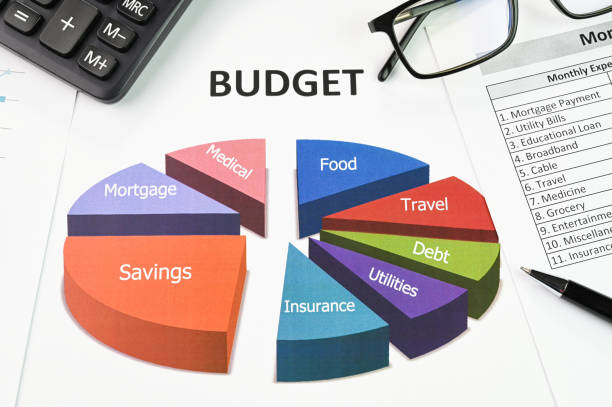
A realistic budget starts with your take-home pay. Write down your fixed costs: rent or mortgage, utilities, insurance, and any loan payments. These are the non-negotiable items. Then you set aside money for groceries, transportation, and other variable needs. Whatever remains can be used for savings, entertainment, dining out, or extra debt payments. The key is to include a line for credit card payments that goes beyond the minimum. If you only pay the minimum, you will carry a balance for a long time, which raises your utilization and costs you a lot in interest. A budget that forces you to pay more than the minimum, even if it is just $20 or $50 extra, will gradually lower your balances and improve your score.
Another important habit is scheduling your bill payments right after you get paid. Many people wait until the due date, then forget or run short of cash. If your budget maps out exactly when each bill is due and you set aside that amount at the start of the month, you reduce the risk of a late payment. A single late payment can stay on your credit report for seven years, so missing a due date by even a few days can hurt you significantly. Setting up automatic payments for at least the minimum amount is a good safety net. But if your budget allows, you can automate a higher amount to make faster progress.
Your budget also helps you avoid the trap of using credit for things you cannot afford. Suppose your car needs new tires, and you do not have any cash saved because your budget has no emergency fund category. You might put the tires on a credit card and pay them off over several months. That adds to your utilization and creates a recurring payment you did not plan for. A well-designed budget includes a small emergency fund contribution every month, even if it is just $25. Over time, that fund can absorb surprises without pushing you deeper into credit card debt.
Another way a budget and credit connect is through your debt-to-income ratio. This ratio compares your total monthly debt payments to your monthly gross income. While it is not part of your credit score, lenders look at it when you apply for a mortgage or auto loan. A lower debt-to-income ratio means you have more room in your income to cover a new loan. Budgeting to reduce your existing debts, such as paying off a credit card or a small personal loan, lowers this ratio. It also frees up monthly cash that you can then apply to other goals.
One practical method is the zero-based budget. With this approach, every dollar of your income has a job. You assign each dollar to a spending category, a savings category, or a debt payment category until your income minus your outgo equals zero. This forces you to be aware of where every dollar goes. It also reveals leaks, like small subscription services or frequent coffee purchases, that you could redirect toward credit card payments. That extra money may not seem like much, but paying an extra $30 per month on a card with a $1,500 balance can cut months off your payoff timeline and save you over $100 in interest charges.
You do not need to be perfect with your budget. The point is to create a plan that you can follow most of the time. When you overspend in one area, adjust another area next week or next month. The more consistently you follow a budget, the more predictable your cash flow becomes. Predictable cash flow makes it easier to pay all your bills on time and to keep your credit card balances low. Both of those habits directly boost your credit score over time.
Finally, remember that your credit score is not a reward for being frugal. It is a reflection of how responsibly you handle borrowed money. A budget helps you borrow only what you can repay and repay on time. If you never look at your budget, you may accidentally use your credit cards as a backup income source. That turns credit from a convenience into a burden. Tracking your spending, planning your payments, and keeping some room for unexpected costs are all practical steps that link your daily decisions to your long-term financial health. After a few months, you will notice that your balances are lower, your payments are easier to make, and your credit score starts to climb. That improvement is not magic. It is just your budget doing its real job.