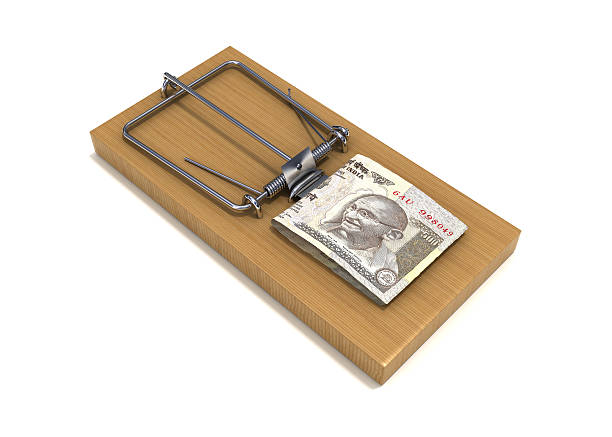
When you open your credit card statement and see the minimum payment due, it can feel like a lifeline. Thirty dollars this month, maybe fifty. That’s manageable, you tell yourself. You pay the minimum, breathe a sigh of relief, and move on with your life. What you might not realize is that you’ve just signed up for a slow-motion financial trap. The minimum payment is designed to keep you in debt as long as possible, and the stress that builds up over time is far heavier than that small monthly bill suggests.
Most credit card companies calculate the minimum payment as a tiny fraction of your total balance—usually between 1% and 3% plus any interest and fees. If you owe $5,000 at an 18% annual interest rate, your minimum might be around $100. Sounds reasonable, right? But here is the catch: that $100 barely covers the interest you racked up that month. On a $5,000 balance at 18% APR, the interest is about $75. So only $25 of your payment actually reduces what you owe. The rest just keeps the credit card company happy while your principal barely moves. At that pace, it will take you nearly 20 years to pay off the debt, and you will have paid over $7,000 in interest alone—more than double what you originally borrowed.
This is where financial stress quietly creeps in. You start to notice that your credit card balance never seems to go down, even though you make payments every month. That feeling of being stuck is a major source of anxiety. You begin to wonder if you will ever be free of the payments, and that uncertainty colors every other financial decision you make. You avoid looking at your bank account. You hesitate to open bills. You start to feel like you are running on a treadmill that keeps speeding up. This is not just a math problem; it is an emotional weight that affects your sleep, your relationships, and your ability to think clearly about your future.
The hidden driver of this stress is the fact that minimum payments create a trap of low progress. You are not making meaningful headway, so you never experience the relief of watching the balance drop. Instead, you watch it hover in the same range month after month. That stagnation is demoralizing. It makes you feel like you are not in control of your money—and by extension, not in control of your life. For middle-class consumers who pride themselves on being responsible, this feeling can be especially crushing. You might start to blame yourself, thinking you lack discipline, when the real problem is the structure of the payment system itself.
But the stress does not stay contained to your credit card. It leaks into every corner of your finances. When a large portion of your monthly income goes to minimum payments and interest, you have less money for savings, emergencies, or even everyday expenses like groceries and gas. So when an unexpected car repair or medical bill shows up, you have no cushion. You put that expense on the same credit card, increasing the balance further. Now your minimum payment goes up a little, but your stress goes up a lot. You start juggling bills, paying one late so you can cover another. Late fees pile on. Your credit score drops. And then the card companies raise your interest rate because you were late—a penalty rate that can shoot up to 29% or higher. Now even less of your payment goes toward the principal.
This is the snowball effect in action. What began as a manageable $500 holiday spending or a necessary $1,000 home repair can turn into a $10,000 nightmare that takes years to escape. And the entire time, you are carrying a level of financial stress that feels like a low-grade fever—always there, sapping your energy, making you irritable, and dimming your sense of possibility. You stop dreaming about a vacation, a new car, or even a night out because those things feel irresponsible when you are drowning in debt. Your world shrinks.
The way out is not through minimum payments. It is through understanding that the minimum is not a solution; it is a seductive delay tactic. The real choices are harder: paying as much as you can above the minimum each month, cutting expenses drastically, or even seeking a balance transfer to a card with a lower rate. But none of these steps are easy when you are already stretched thin. That is why the best time to break the cycle is before it starts. If you can avoid the habit of paying only the minimum, you save yourself years of hidden stress and thousands of dollars in wasted interest.
Financial stress from minimum payments is not a sign of failure. It is a sign that the system works exactly as designed—to keep you paying for as long as possible. Recognizing that fact is the first step toward reclaiming your peace of mind. You can choose to pay more than the minimum, even if it hurts in the short term. Because the alternative is a slow, quiet crisis that eats away at your life, one statement at a time.