Most people think they are playing the credit game correctly when they pay their full credit card balance before the due date. They avoid late fees, they keep their account in good standing, and they assume their credit score is safe. But there is a hidden detail in how credit card companies report your activity that can hurt your score even if you pay in full every month. That detail is the difference between your statement date and your payment date.
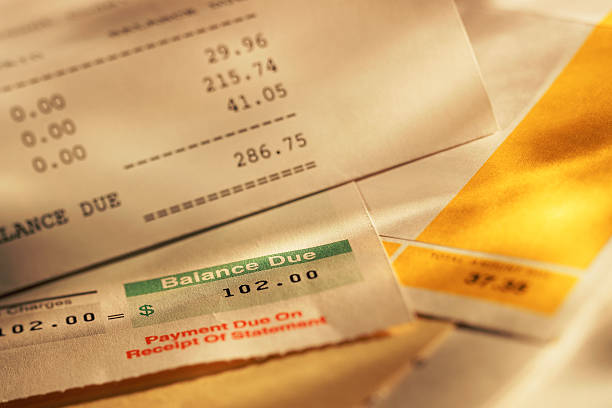
Your credit card issuer sends you a statement once a month. This statement shows your balance on that specific day, known as the closing date or statement date. What many middle-class consumers do not realize is that this balance is the number your card issuer reports to the credit bureaus. The credit bureaus do not see when you pay the bill. They only see the snapshot taken on the statement date. Even if you pay the entire balance a week later, the credit bureaus already have a record of you carrying that balance. This reported balance directly determines your credit utilization ratio.
Credit utilization is simply the amount of credit you are using compared to your total credit limit. If you have a card with a ten thousand dollar limit and your statement shows a balance of eight thousand dollars, your utilization for that card is eighty percent. Even if you pay that eight thousand dollars off the next day, the credit bureaus recorded that eighty percent number. High utilization like that tells lenders you are stretched thin, even if you only carried the balance for a few days. Your credit score can drop significantly as a result.
The solution is straightforward, but it requires a shift in thinking about when to pay. Instead of waiting for the due date to make your payment, you should pay down your balance before the statement closing date. This way, the number the card issuer reports to the credit bureaus is small or zero. This practice is often called the zero balance method or early payment strategy. It is not complicated, but it does break the habit of treating your credit card like a monthly bill that you pay once.
Consider how this plays out in practice. You use your card throughout the month for groceries, gas, a dinner out, and maybe a larger purchase like a new laptop. Your total spending is three thousand dollars. Your statement closes on the fifteenth of the month. If you wait until the due date on the tenth of the next month to pay, the credit bureaus see that three thousand dollar balance. If your total credit limit across all cards is ten thousand dollars, your utilization is thirty percent, which is the upper boundary of what is considered good. But if that one card carrying the three thousand dollars is your only card, your utilization is a full thirty percent. If you have multiple cards, the same logic applies to each individual card.
Now imagine you make a payment of twenty eight hundred dollars on the fourteenth, just before the statement closes. Your reported balance becomes just two hundred dollars. Your utilization drops to two percent. Your credit score sees a card that is being used responsibly without appearing maxed out. You still pay the remaining two hundred dollars by the due date, so you never pay interest. You have simply changed the timing of your payment to control what the credit bureaus see.
This strategy does not require paying more money. It requires paying money earlier. You need to know your statement closing date for each card. You can find this date on your paper statement or in your online account settings. Set a reminder to log in and make a payment a few days before that date. You do not have to pay the balance to zero if that is not convenient, but paying it to a low number, ideally under ten percent of your credit limit, will give you the best score boost.
Some people worry that paying early will confuse their billing cycle or cause them to miss the due date. The key is to understand that your minimum payment is still due by the due date regardless of when you make extra payments. As long as you pay at least the minimum by the due date, you are safe. You can make a large payment before the statement date and then pay the remaining small balance or minimum by the due date. The system is designed to handle this.
There is one more layer worth understanding. Some card issuers report your balance at different times, not just the statement date. But the vast majority use the statement date as the reporting date. You can call your card issuer to confirm their specific reporting schedule, but assuming the statement date is safe for almost all major banks.
This strategy is especially important for middle-class consumers who may have modest credit limits. A single unexpected expense, like a car repair or a medical bill, can push utilization high even if you plan to pay it off quickly. By making an early payment before the statement date, you keep that high balance hidden from the credit bureaus. You protect your score while still using your card for whatever life throws at you.
The credit system rewards you not for being responsible with your due date, but for appearing responsible on your statement date. Learn the difference, adjust your payment timing, and your credit score will reflect your true financial situation rather than a misleading snapshot.