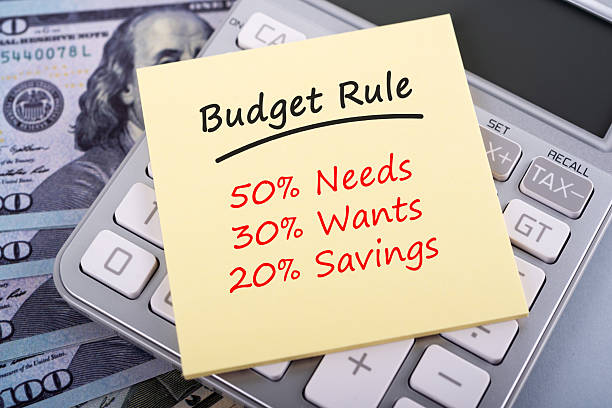
 If you have ever felt overwhelmed by the idea of creating a personal budget, you are not alone. Many middle-class consumers know they should track their spending, but the thought of categorizing every coffee, utility bill, and subscription feels like a part-time job. The 50/30/20 rule offers a straightforward alternative. Developed by Senator Elizabeth Warren and her daughter Amelia Warren Tyagi, this method divides your after-tax income into three broad buckets: needs, wants, and savings or debt repayment. It is not a rigid accounting system. Instead, it gives you a clear, flexible guideline that keeps your finances on track and, just as importantly, supports your credit health.The first bucket, needs, should take up no more than fifty percent of your take-home pay. Needs are the expenses you cannot avoid: rent or mortgage, utilities, groceries, minimum loan payments, car insurance, and health care. If your housing costs or transportation eat up more than half your income, your budget is already stretched, and you are at higher risk of missing payments or carrying credit card balances. That is where the personal budget connects directly to credit management. When you stay within the fifty percent limit for needs, you create a cushion. You can make your payments on time, and your credit utilization ratio—the amount of credit you use compared to your limits—remains low. Both of those factors are major drivers of your credit score.The second bucket, wants, covers everything else you spend money on that is not strictly necessary. This includes dining out, streaming services, new clothes, vacations, hobbies, and even upgraded phone plans. The rule says you should limit wants to thirty percent of your income. Many people skip this category entirely when they try to budget because they feel guilty about spending on fun. But the 50/30/20 rule acknowledges that you need some flexibility. If you deny yourself every small pleasure, you are more likely to blow your entire budget on a single shopping spree. Instead, you allocate a reasonable slice for wants and stick to it. This approach prevents you from charging unexpected luxury purchases to a credit card and then struggling to pay the balance. By keeping wants at thirty percent, you protect your credit utilization and avoid the high interest charges that can spiral out of control.The final bucket is the most important for your long-term financial health: twenty percent of your income should go toward savings and debt repayment. Savings includes contributions to an emergency fund, a retirement account, or a down payment fund. Debt repayment means paying more than the minimum on credit cards, personal loans, or student loans. If you have high-interest credit card debt, this twenty percent is your lifeline. Every dollar you put toward that balance reduces your utilization ratio and saves you future interest. It also builds a positive payment history, which is the single largest factor in your credit score. If you have no debt, you can put the full twenty percent into savings and investments.To apply the 50/30/20 rule, start by calculating your monthly after-tax income. If you are paid every two weeks, multiply your take-home pay by 2.17 to get a monthly estimate. Then list your needs. Be honest. A phone plan with unlimited data and a new device might feel like a need, but a cheaper plan with enough data for work and communication is a need. The difference gets moved to the wants category. Next, add up your wants. This is often the hardest step because small expenses add up quickly. Once you have totals, compare them to the fifty and thirty percent limits. If your needs are at sixty percent, you know you need to cut housing or transportation costs or find a way to increase your income. If your wants are at forty percent, you need to trim subscriptions, dining out, or shopping.The beauty of this system is that it works with any income level. A middle-class household earning sixty thousand dollars after taxes has roughly three thousand dollars a month to spend on needs. If their mortgage is fifteen hundred dollars, that leaves only fifteen hundred dollars for everything else. They quickly see that a car payment of five hundred dollars might push them over the limit. At that point, they have a clear signal to refinance, sell the car, or find a cheaper home. Similarly, the twenty percent savings target means they should be putting six hundred dollars a month toward debt or savings. If they are only paying the minimum on a credit card, they know they are falling short.One of the biggest advantages of the 50/30/20 rule is that it helps you avoid the trap of tracking every penny. Instead, you monitor only three numbers. That reduces the mental burden and keeps you focused on the big picture. Over time, as your income grows or your debts shrink, you can adjust the percentages. Some people shift to a 60/20/20 split if they live in an expensive city, but the principle remains the same. The goal is to keep your essential costs low enough that you have room to save and pay down debt.For middle-class consumers, the connection between this budget and credit cannot be overstated. When you control your needs, you make payments on time. When you limit your wants, you avoid running up balances. When you prioritize savings and debt repayment, you lower your utilization and build a strong history. The 50/30/20 rule is not a magic fix. It requires discipline and honesty. But it gives you a simple, repeatable process that works with your real life. And that is exactly what a good personal budget should do: protect your present and build your future credit health.
Yes. The definition of overextension is not just about defaulting; it's about a lack of financial resilience. If an unexpected $500 expense would force you to miss a payment or take on more debt, you are likely overextended and living paycheck-to-paycheck.
This is a state law that sets a time limit on how long a collector can sue you to collect a debt. The length varies by state and type of debt. Making a payment or even acknowledging the debt can restart this clock.
Focus on high-interest debts (avalanche method) or smallest balances first (snowball method) to save money or build momentum.
You make minimum payments on all debts but focus any extra repayment funds on the debt with the smallest outstanding balance. After paying it off, you take the total amount you were paying on that debt and apply it to the next smallest balance.
Credit tools are financial products like balance transfer credit cards, personal loans, or home equity lines of credit (HELOCs) designed to consolidate or restructure debt. They can help simplify payments and reduce interest rates, making debt more manageable.