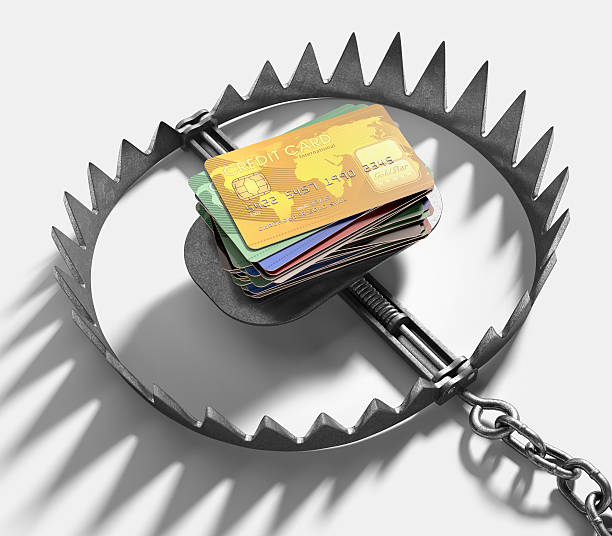
When you open your credit card statement each month, the smallest number on the page can feel like a lifesaver. That minimum payment amount—often just a few percent of your total balance—offers an immediate relief from the pressure of a big bill. You can pay it and move on with your life. But that small number is one of the most expensive and stressful traps in personal finance. Making only the minimum payment each month creates a cycle of long-term debt, growing interest, and mounting financial stress that can quietly ruin your credit and your peace of mind.
To understand why this happens, you need to see exactly how minimum payments work. Credit card companies typically set your minimum payment at around one to three percent of your total balance, plus any interest and fees that have accrued. Let’s say you have a five-thousand-dollar balance on a card with a twenty-percent annual interest rate. Your minimum payment might be one hundred dollars. On the surface, that seems manageable. But here is what that one hundred dollars actually does: about eighty-three dollars of it goes straight to covering the interest charges from that month. Only the remaining seventeen dollars actually reduces your principal—the original five thousand dollars you borrowed. If you pay exactly one hundred dollars every month and never add new charges, it will take you more than thirty years to pay off that five thousand dollars. And you will end up paying nearly nine thousand dollars in interest alone.
That is a staggering number, and it explains why so many middle-class consumers feel stuck. They make their payments on time, they never miss a due date, and they think they are doing everything right. Yet the balance barely moves. Over time, this creates a deep sense of hopelessness. You start to believe you will never get out from under the debt, because every payment feels like throwing money into a hole. That hopelessness is a major source of financial stress. It affects your mental health, your relationships, and your ability to focus at work. You may start avoiding your bills, checking your balance less often, or making excuses for why you cannot pay more. This avoidance only makes the problem worse.
Another hidden stressor is the way minimum payments reduce your flexibility. When most of your available cash goes toward interest, you have less money for emergencies, savings, or even everyday expenses. A single car repair or medical bill can push you into a crisis, forcing you to put more charges on the same credit card. That increases your balance, which raises your minimum payment, which makes it even harder to escape. This is the minimum payment spiral. It feeds on itself, and the faster it spins, the more financial anxiety you feel.
There is also the psychological impact of watching your credit utilization ratio climb. That ratio—the amount of credit you are using compared to your total credit limit—is one of the biggest factors in your credit score. When you only make minimum payments, your balance stays high month after month. That high utilization ratio drags down your credit score, which means you will get higher interest rates on future loans, car financing, or even a mortgage. Every time you apply for credit and get turned down or offered a worse rate, that feeling of rejection adds another layer of stress. You may start to see your financial future as limited, and that belief can keep you from making long-term plans like buying a home or starting a business.
The good news is that breaking free from the minimum payment trap does not require a dramatic windfall. It starts with a simple shift in mindset: treat the minimum payment as an absolute floor, not a recommended amount. Any extra dollar you pay above the minimum goes entirely toward reducing your principal. That means you save future interest and shorten the repayment timeline. For example, if you increase your monthly payment from one hundred dollars to two hundred dollars on that same five-thousand-dollar balance, you cut the repayment time from thirty years to just over three years, and you save more than six thousand dollars in interest. That is real money you can use for savings, emergencies, or simply breathing easier.
Of course, not everyone can double their payment overnight. The key is to find small, consistent ways to add extra dollars. Round up your payment to the nearest fifty dollars. Send in a small additional payment mid-month. Put any windfall—a tax refund, a bonus, a birthday gift—toward the card. Even twenty extra dollars a month makes a difference over time. The most important step is to stop treating the minimum as normal. Normalize paying more, even if it is just a little. Your credit card company wants you to pay the minimum because they make money from your interest. Your financial peace is worth more than their profit.
Debt stress from minimum payments is real, but it is also reversible. The moment you decide to pay more than the minimum, you reclaim control. You stop working for the interest and start working for yourself. That shift alone can reduce your anxiety, improve your credit, and show you that your financial situation is not hopeless—it is just waiting for a smarter move.